Your legacy software might finally have an exit
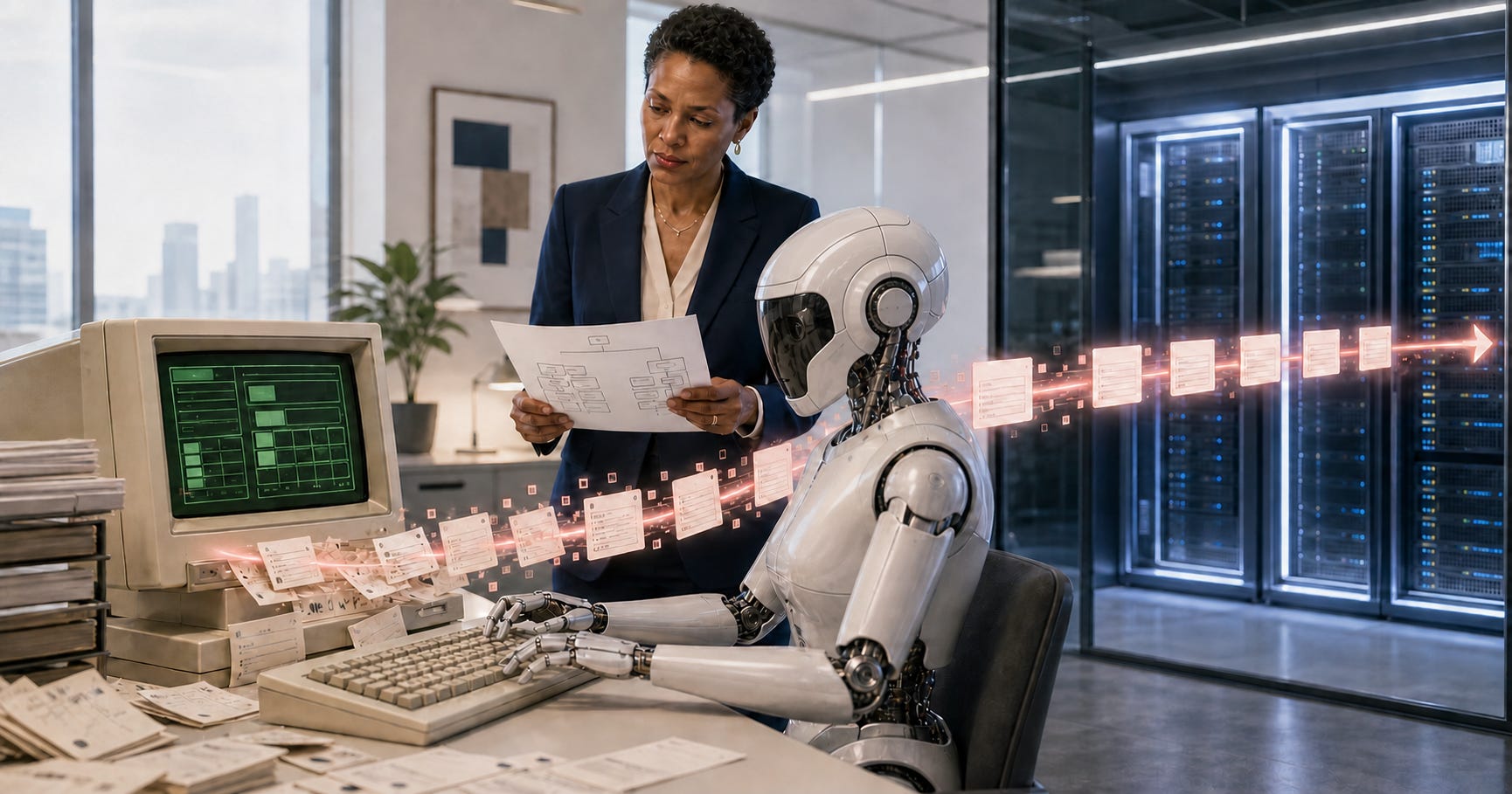
Computer use gives AI agents access to old systems that have no API, connector or useful export.
Yesterday, I asked what makes some software subscriptions so sticky for businesses, even when their features no longer keep up.
Two replies pointed to the customer history stored inside them, the undocumented dependencies, and the unknown, hence scary cost of migrating.
For years, that made many legacy systems practically untouchable. A clean migration required an API, a connector, or at least a useful export.
But the tools creating the worst lock-in are often old desktop applications with none of them. So the only migration path would have been someone sitting there, understanding what everything means, copying the information, and rebuilding it somewhere else.
Of course, assigning someone to that work makes no financial—and arguably little human—sense.
Computer use changes that calculation.
An AI agent can work through the same interface a person uses. It can navigate menus, open records, read the screen, map fields, and propose an opinionated migration path for a human to review and approve.
Of course, there will be iterations, so some human time will still be involved. But nothing compared with the hours of thankless work an agent can absorb: understanding, untangling, and documenting the old system, then copying the data, entering it into the new one, and comparing the results.
This might be the real opportunity behind computer use: giving businesses a credible way out of software they thought they could never leave.
Still relying on an old tool because leaving feels impossible? The Next Tech Move Diagnostic can help clarify what should be kept, migrated, automated, or replaced.